Everything You Need to Know About Listed Building Status
If you own an older property in Great Britain, or you’re thinking of buying one, sooner or later you’ll run into the phrase “listed building.” It sounds bureaucratic, and the legal framework behind it is indeed bureaucratic, but the idea itself is straightforward: some buildings matter enough, architecturally or historically, that the state wants a say in what happens to them. In England and Wales the system sorts those buildings into three tiers — Grade I, Grade II*, and Grade II — and the tier your property sits in determines, in practical terms, how much of a hoop-jumping exercise it will be when you want to replace a window, re-point a wall, or take out an internal partition. Before I get into the grades themselves, it’s worth saying there’s no “Grade III” in this system, despite it being a common misconception; and the grading system used in Scotland (Categories A, B, and C, managed by Historic Environment Scotland) and Northern Ireland (Grades A, B+, B1 and B2, managed by the Department for Communities) runs in parallel to the English and Welsh one rather than extending it. Everything that follows applies specifically to England, with Wales now operating under broadly similar rules via the Historic Environment (Wales) Act 2023.
Grade I
Grade I is the top of the pyramid, and it’s a small pyramid at the top. According to Historic England, Grade I buildings are those of “exceptional interest,” and only around 2.5% of listed buildings in England sit in this category — the kind of places you’d put on a postcard. Buckingham Palace, York Minster, the Tower of London, Durham Cathedral: Grade I territory. Realistically, unless you’ve made some very unusual property decisions, you won’t own one, and if you do you’ll already have a conservation officer on speed-dial.
Grade II*
Grade II* (spoken aloud as “Grade Two Star”) is the middle tier, covering “particularly important buildings of more than special interest,” and makes up roughly 5.8% of the national list according to the same Historic England figures. Think Battersea Power Station, the Clifton Suspension Bridge, or a particularly fine Georgian country house with unusually intact interiors. Grade II is where the overwhelming majority of listed buildings actually live — about 91.7% of the list — and it’s the grade most homeowners will encounter.
Grade II
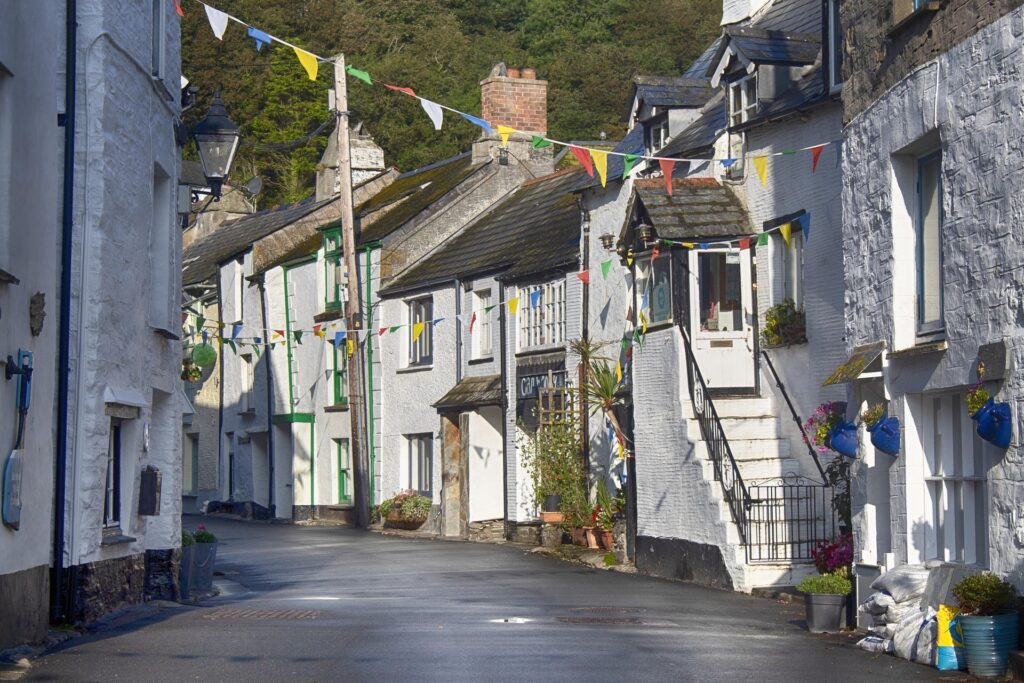
A Grade II listing means the building is “of special interest, warranting every effort to preserve it,” and it covers everything from Devon longhouses and Cornish granite farmhouses to Victorian terraces, Regency townhouses, and the occasional oddity like a cast-iron telephone box or a village horse trough. The grade tells you how significant the state thinks your building is; it does not, importantly, tell you how much of the building is protected. Listing covers the whole structure, inside and out, regardless of grade.
Laws and Regulations
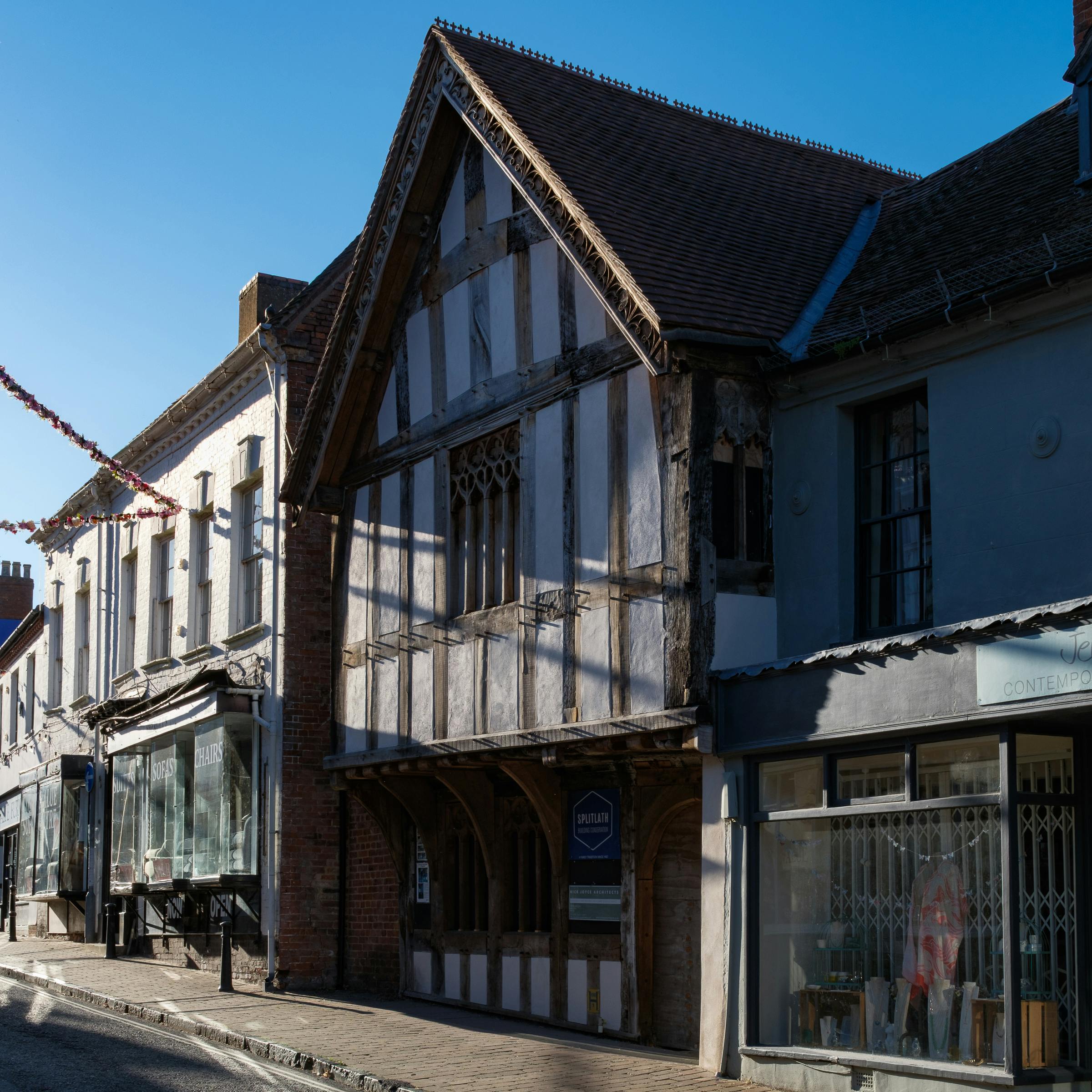
The legal machinery behind all of this is the Planning (Listed Buildings and Conservation Areas) Act 1990, and the section every owner and every tradesman needs to be aware of is Section 9. In plain English, Section 9 makes it a criminal offence to demolish a listed building, or to alter or extend it in any way that affects its character as a building of special architectural or historic interest, without first obtaining listed building consent from the local planning authority. That wording — “affects its character” — is the hinge the whole system turns on, and it’s broader than most people assume. Replacing timber sash windows with uPVC? Affects character. Taking out a Victorian fireplace, pulling up original floorboards, skim-plastering over lime-plaster walls, swapping an old panelled door for a modern flush one? All of those can affect character, and all of them can require consent, even though none of them would need so much as a nod from the council in an unlisted house. The government’s planning guidance on the historic environment spells this out clearly: undertaking works, or causing works to be undertaken, without consent is an offence regardless of whether the owner knew consent was needed. Ignorance isn’t a defence, which is why a lot of honest mistakes end up as enforcement cases. If unauthorised work has been carried out, the local planning authority can serve a listed building enforcement notice under Section 38 of the Act, which can require the owner to undo the work and restore the building to its previous state at their own expense.
Penalties on conviction are not trivial: unlimited fines in the Crown Court and up to two years’ imprisonment are the theoretical maximums, and while custodial sentences are rare, the fines are very real, as is the cost of reinstatement.
In day-to-day practice, the grade doesn’t change what the law says — Section 9 applies equally to a Grade I cathedral and a Grade II cottage — but it does change how local planning authorities and statutory consultees approach applications. Historic England is a statutory consultee for works to Grade I and Grade II* buildings, meaning the council must notify them and consider their view before granting consent, whereas for straightforward Grade II applications the decision usually sits with the local conservation officer alone. That translates into longer timelines, more scrutiny, and narrower latitude the higher up the grades you go. The sensible order of operations for any owner is always the same: before you commission drawings, order materials, or put a tradesman on site, check whether your property is listed using the National Heritage List for England, which is free to search by postcode; read the list entry itself, because it often describes the features considered significant; and have an early, informal conversation with your local authority’s conservation officer. Most councils offer pre-application advice, and a fifteen-minute phone call at the start of a project can save months of enforcement misery at the end of one. If you’re planning anything beyond genuine like-for-like repair, submit a listed building consent application — there’s no fee for it, which at least removes one excuse for not doing it. And if you’re hiring a carpenter, a builder, or any other trade, make sure they’ve actually worked on listed property before.
Period buildings want lime mortar, not cement; breathable paint, not modern acrylic; traditional joinery repairs, not replacement.
Getting that wrong doesn’t just damage the building — it can land you, as the owner, on the wrong end of the 1990 Act. Heritage work rewards patience and the right specialist hands; the grading system is really just the state’s way of flagging how much both of those things matter.
A brief word on the rest of the United Kingdom
The English system is not the whole story. Scotland runs its own listing regime under the Planning (Listed Buildings and Conservation Areas) (Scotland) Act 1997, administered on behalf of Scottish Ministers by Historic Environment Scotland. There are three categories rather than three grades, and the numbers don’t quite translate: Category A covers buildings of national or international importance, Category B covers major regional examples, and Category C covers representative examples of a particular period or style. Of Scotland’s roughly 47,000 listed buildings, around 8% are Category A, 60% are Category B, and 32% are Category C — a noticeably flatter distribution than England’s top-heavy pyramid, reflecting a slightly different philosophy about what deserves protection. Crucially, and a point worth emphasising to any owner, the category in Scotland does not affect the level of legal protection: the same consent regime applies to a Category C cottage as to a Category A castle. One quirk worth knowing is the 2020 Supreme Court ruling in Dill v Secretary of State for Housing, Communities and Local Government, which clarified that to qualify as a “building” under listing legislation a structure must meet a three-fold test of size, permanence, and degree of physical attachment to the ground — a ruling that applies across the UK and that occasionally rescues garden ornaments, sundials, and the like from an unexpected listing.
Northern Ireland is the outlier, and in some ways the most interesting case. Listing there only began in 1974, decades after the rest of the UK, and the statutory basis is now the Planning Act (Northern Ireland) 2011 (with earlier work carried out under the Planning (Northern Ireland) Order 1991). The register is maintained by the Historic Environment Division of the Department for Communities, and it uses four grades — A, B+, B1, and B2 — though the older Grade B designation is still encountered in historic records. The honour of being the first building listed in Northern Ireland, in March 1974, went to Portrush Railway Station, a modest but handsome Victorian terminus on the Causeway Coast — a reminder that listing isn’t just for castles and country seats. Two details distinguish the Northern Irish system from its counterparts. First, the grades in Northern Ireland are not statutory: unlike in England, Scotland, and Wales, the grade itself has no legal force, and the same controls apply equally to every listed building regardless of category. Second, as in Scotland, the consent regime is uniform — meaning an owner in Belfast or Derry applying to alter a B2 terraced house is, legally speaking, in the same boat as one applying to alter a Grade A Georgian mansion. For a carpenter or renovation contractor working across borders, the practical takeaway is simple: the label on the tin differs from one jurisdiction to the next, but the obligation to get consent before touching anything of character is universal.